Infrastructure

An Anti-DDoS architecture built to return clean traffic

Peeryx combines adaptive mitigation, multiple delivery models and a clear network path so existing environments can be protected without becoming a black box.

Adaptive mitigation built around real traffic and production constraints
Integration compatible with BGP, GRE, IPIP, VXLAN, cross-connect and router VM
Clean traffic delivered back according to topology, target latency and desired control level
Architecture built for operators, hosters, gaming, SaaS and critical services
Peeryx infrastructure

An anti-DDoS architecture designed to absorb, filter and hand back clean traffic

The Peeryx infrastructure is built as a full chain: network exposure, mitigation, handoff decisions, clean traffic delivery and ongoing operations. The goal is to protect what already runs with a readable model, not to impose a black box.

  • Clear view of the traffic path from Internet edge to production
  • Several delivery models depending on the network control you need
  • Positioning that fits environments already in production
  • A concrete explanation of what Peeryx protects and how

Catch the attack in the right place

The goal is to absorb the attack before it degrades production by placing mitigation at the right level of network exposure.

Upstream relief when it is useful

Upstream filtering can complement local mitigation when attack volume really demands it, without becoming the only answer to every event.

Clean handoff back to production

Cross-connect, tunnels or a router VM are integration choices. Peeryx treats them as design tools, not imposed constraints.

Readable operations for the customer

The customer should be able to understand what enters, what is filtered, what comes back and what remains under their own network control.

Mitigation capacity 15 Tbps
Transit delivery modes 5
Supported protection layers L3 / L4 / L5 / L7
Free trial on offers 24h
Architecture principles

A credible anti-DDoS architecture is judged by how it operates as well

Raw capacity matters, but it is not enough. A serious platform must also make entry points, mitigation model, handoff design and customer operations understandable.

Visibility into the traffic path

The customer should understand where traffic enters, where it is filtered and how clean traffic returns to production.

Upstream relief when it is useful

Upstream logic should help with extreme volumes without becoming the only answer to every attack pattern.

Handoff matched to topology

A good design does not force the same model on every customer: tunnel, BGP, cross-connect, protected IPs or hybrid approaches.

Production-first

The role of the service is to protect what already runs, keep operations possible and avoid introducing unnecessary opaque dependency.

Traffic path

From public exposure to clean traffic: the key steps

The Peeryx mitigation chain should stay readable for a technical team: ingress point, observation, filtering, handoff and return to production.

1. Network exposure

Prefixes are announced through BGP or services are exposed through protected IPs depending on rollout speed and the level of control required.

2. Legitimate traffic observation

Useful traffic provides the baseline for normal patterns, lower false positives and cleaner mitigation decisions.

3. Adaptive filtering

Attack signatures are correlated with real service behavior so the attack is blocked without breaking legitimate usage.

4. Handoff and delivery

Clean traffic is returned through cross-connect, GRE, IPIP, VXLAN or a router VM according to the chosen design.

5. Ongoing operations

The model remains documentable and understandable: your team knows what is protected, what is handed back and what stays locally controlled.

Mitigation fabric

Traffic enters a mitigation layer built to absorb volumetric and protocol attacks, then distinguish legitimate traffic before anything is handed back to production.

Datacenter or tunnel delivery

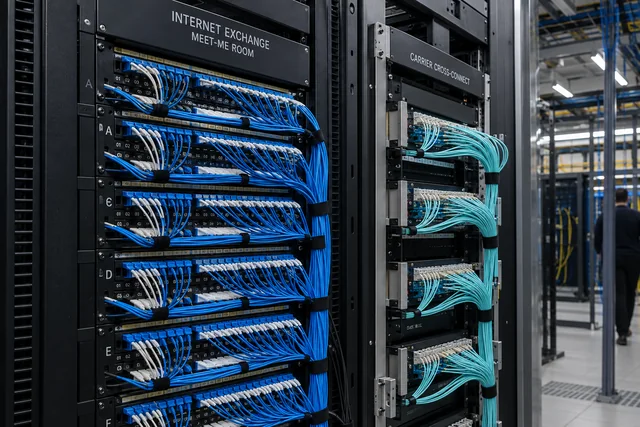
Depending on the topology, clean traffic can be delivered back through cross-connect, GRE, IPIP, VXLAN or a router VM so the integration model stays coherent with the existing environment.

Interconnection model

Peeryx fits both full BGP scenarios and architectures where the priority is to protect an existing production stack without rebuilding everything around a new edge design.

Operational resilience

A serious anti-DDoS architecture does not stop at filtering. It must also remain understandable for operations, preserve the useful routing choices and return legitimate traffic cleanly.

Anti-DDoS architecture

What a credible anti-DDoS architecture must control

A serious anti-DDoS infrastructure is more than raw capacity numbers. It must control ingress, filtering decisions, observability and clean traffic delivery all the way back to the useful layer.

Ingress capacity and real headroom

The design has to absorb volumetric attacks while preserving operational margin for signalling, clean return traffic and overall stability.

Readable filtering hot path

Mitigation logic must stay efficient, predictable and compatible with advanced filtering policies without turning operations into a black box.

Observability after the decision point

A good architecture separates the fast drop path from the visibility needed to understand attacks, tune rules and prepare upstream escalation.

A clean path back to the service

Legitimate traffic has to return to the right layer: server, proxy, cluster or backbone, with a handoff model that actually matches production.

What Peeryx tries to preserve in production

What Peeryx tries to preserve in production

Peeryx combines adaptive mitigation, multiple delivery models and a clear network path so existing environments can be protected without becoming a black box.

  • A clear reading of the network path between ingress, mitigation and clean delivery
  • Stable latency and a handoff model aligned with the service that is actually exposed
  • A clean separation between upstream protection, custom logic and application layers
  • A path to upstream offload when traffic volume requires additional coarse filtering
Blog

Technical guides, network comparisons and architecture notes

Content written for network teams, hosters, operators and exposed services: protected IP transit, tunnels, BGP, latency, clean handoff, multi-site designs and architecture choices before buying.

FiveM • getinfo error 9 min read

FiveM “Failed to getinfo after 3 attempts” / “Fetching info from server”: blocked UDP, bad proxy or incompatible Anti-DDoS?

In FiveM, “Failed to getinfo after 3 attempts” and “Fetching info from server” often point to the same issue: the join phase is degraded by blocked UDP, a bad proxy, unsuitable Anti-DDoS filtering or a limited hoster. Here is how to diagnose it and why Peeryx FiveM Reverse Proxy Anti-DDoS can prevent it.

Read article
Hoster & specialised Anti-DDoS 17 min read

What to do when your hoster’s Anti-DDoS is no longer enough

When your hoster’s Anti-DDoS is no longer enough, the worst decision is often to migrate in a hurry. This guide explains how to identify the real limit, keep the existing server when possible, then add specialised protection with tunnels, reverse proxy, router VM or protected IP transit.

Read article
Anti-DDoS buying guide Reading time: 18 min

How to choose an Anti-DDoS provider without getting trapped

Choosing an Anti-DDoS provider should not be reduced to a Tbps number or a promise of unlimited protection. What matters is how traffic enters the mitigation layer, how it is filtered, how clean traffic is delivered back, what visibility you get during an attack and which limits actually exist.

Read article
Volumetric mitigation 9 min read

How do you mitigate a DDoS attack above 100Gbps?

Link, PPS, CPU, upstream relief and clean handoff: the real framework behind credible 100Gbps mitigation.

Read the article
Clean traffic delivery 8 min read

Anti-DDoS clean traffic delivery: why the handoff matters as much as mitigation

In Anti-DDoS architecture, mitigation alone is not enough: legitimate traffic still has to be delivered back correctly. This guide explains why clean traffic handoff matters as much as scrubbing, how to choose the right delivery model and which mistakes break daily operations. It also helps compare clean traffic delivery, clean handoff, GRE, IPIP, VXLAN and cross-connect with an operator-grade architecture, operations and buying logic.

Read the article
Upstream pre-filtering 8 min read

Upstream Anti-DDoS pre-filtering: when to use it and why it changes everything

Upstream Anti-DDoS pre-filtering is meant to relieve pressure early, protect links and reduce load before fine-grained decision layers take over. This guide explains when to use it, what it should actually do and why it changes the global cost/performance ratio. It also helps compare upstream Anti-DDoS pre-filtering, link relief, volumetric reduction and layered mitigation with an operator-grade architecture, operations and buying logic.

Read the article
Filtering server 11 min read

Dedicated Anti-DDoS filtering server: what is it really for?

A dedicated Anti-DDoS filtering server separates production from the decision layer, enables more precise logic and keeps the existing stack behind it. This guide explains when the model makes sense, when it does not and how to place it cleanly inside the architecture. It also helps compare dedicated Anti-DDoS filtering server, upstream filtering, clean handoff and production architecture with an operator-grade architecture, operations and buying logic.

Read the article
Routing & latency Reading time: 9 min

Latency, asymmetry and clean traffic delivery

Why the traffic path, local egress and handoff model matter as much as raw mitigation capacity.

Read the article
Gaming Anti-DDoS 9 min read

Gaming Anti-DDoS: why generic filtering is not always enough

Gaming needs Anti-DDoS protection built around sessions, latency, false positives and real protocol behaviour. This guide explains why generic filtering is not always enough and how to design a more serious gaming protection model. It also helps compare gaming Anti-DDoS, false positives, session stability and game-specific filtering with an operator-grade architecture, operations and buying logic.

Read the article

Peeryx FAQ

Do I need to migrate my whole infrastructure to use Peeryx?

No. Peeryx can protect infrastructure already in production through BGP, protected IPs, tunnels, cross-connect or a router VM depending on your topology.

Is asymmetric routing compatible with this architecture?

Yes. Peeryx can take the inbound path while local egress stays elsewhere when that improves latency, cost or operations.

Is cross-connect mandatory?

No. It can be useful in some datacenter setups, but Peeryx also supports GRE, IPIP, VXLAN and router VM models to preserve flexibility.

Why explain the architecture in so much detail?

Because a readable architecture reduces misunderstandings, reassures technical teams and makes it faster to see whether Peeryx really fits the existing environment.

Does Peeryx infrastructure have to replace my application logic or custom filtering?

No. Peeryx can protect the upstream layer and return clean traffic to your own network or application logic. The goal is to strengthen anti-DDoS protection without forcing a full stack replacement.

Why does observability matter in an anti-DDoS architecture?

Because effective mitigation also has to remain operable. Knowing what is filtered, what still passes, when to escalate upstream and how to tune policies is essential over time.

Share your architecture and network constraints

Describe your prefixes, connectivity, egress points, target latency and the way you want clean traffic handed back. We will return with a credible integration design.